Duke Kahanamoku GALLERY

Inside

Six photographs, three still to take

The room is open and these are the first pictures of it. The exhibition wall is not among them, and the reason is further down.
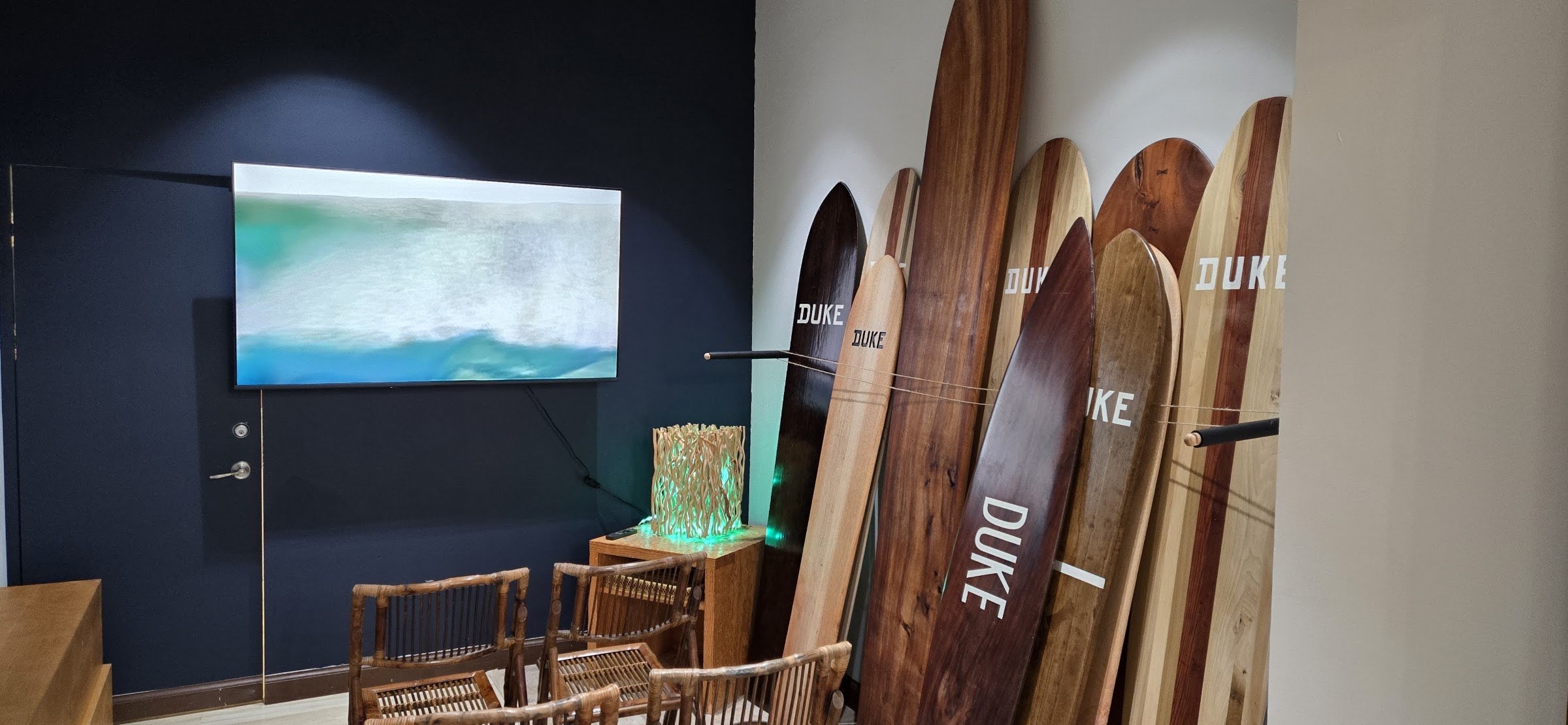
The film alcove: a screen on a dark blue wall, four wooden chairs, and a row of wooden surfboards leaning against the wall beside it.
Plate 01Chairs, the screen, and the boards standing against the wall. The film runs about ten minutes and you do not have to buy anything. Screening rights are being cleared with the film’s producers.
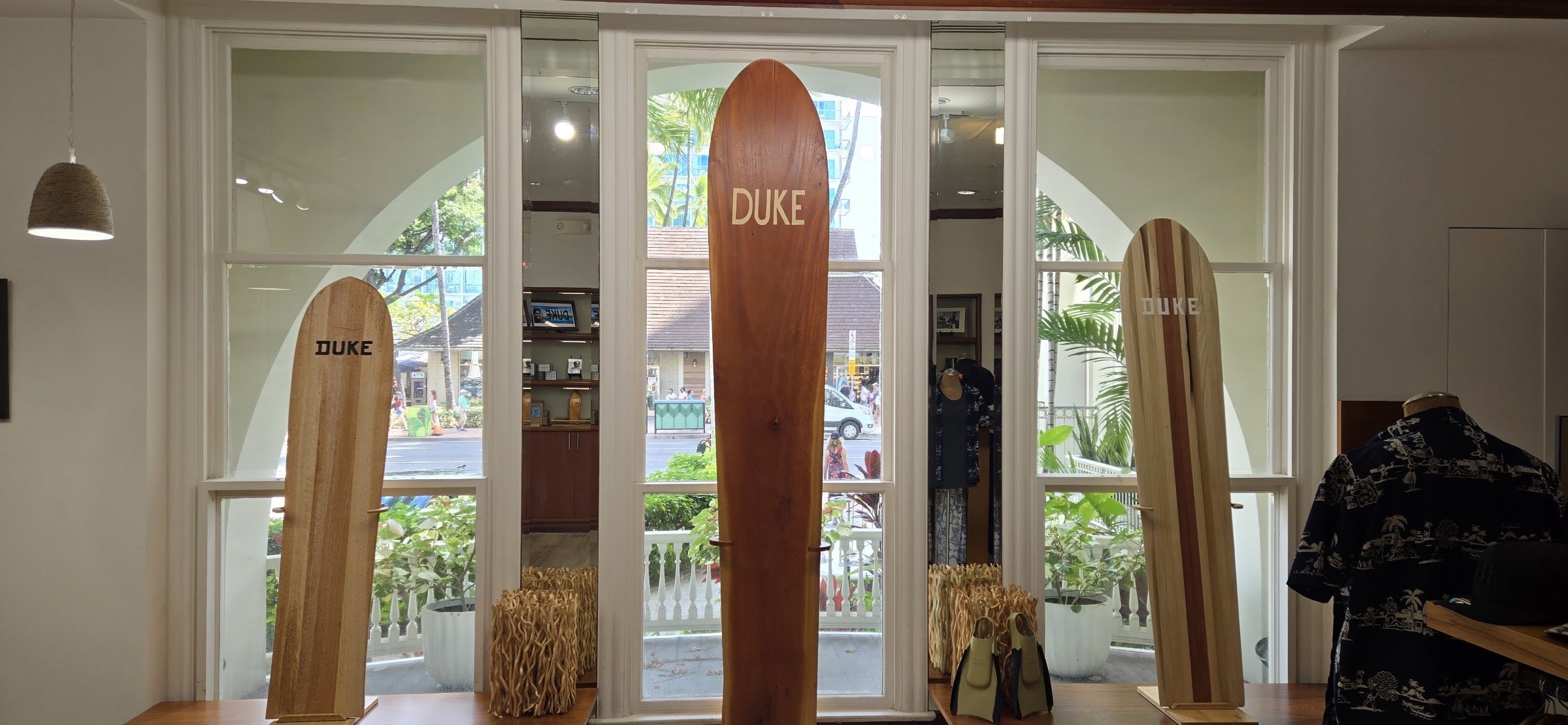
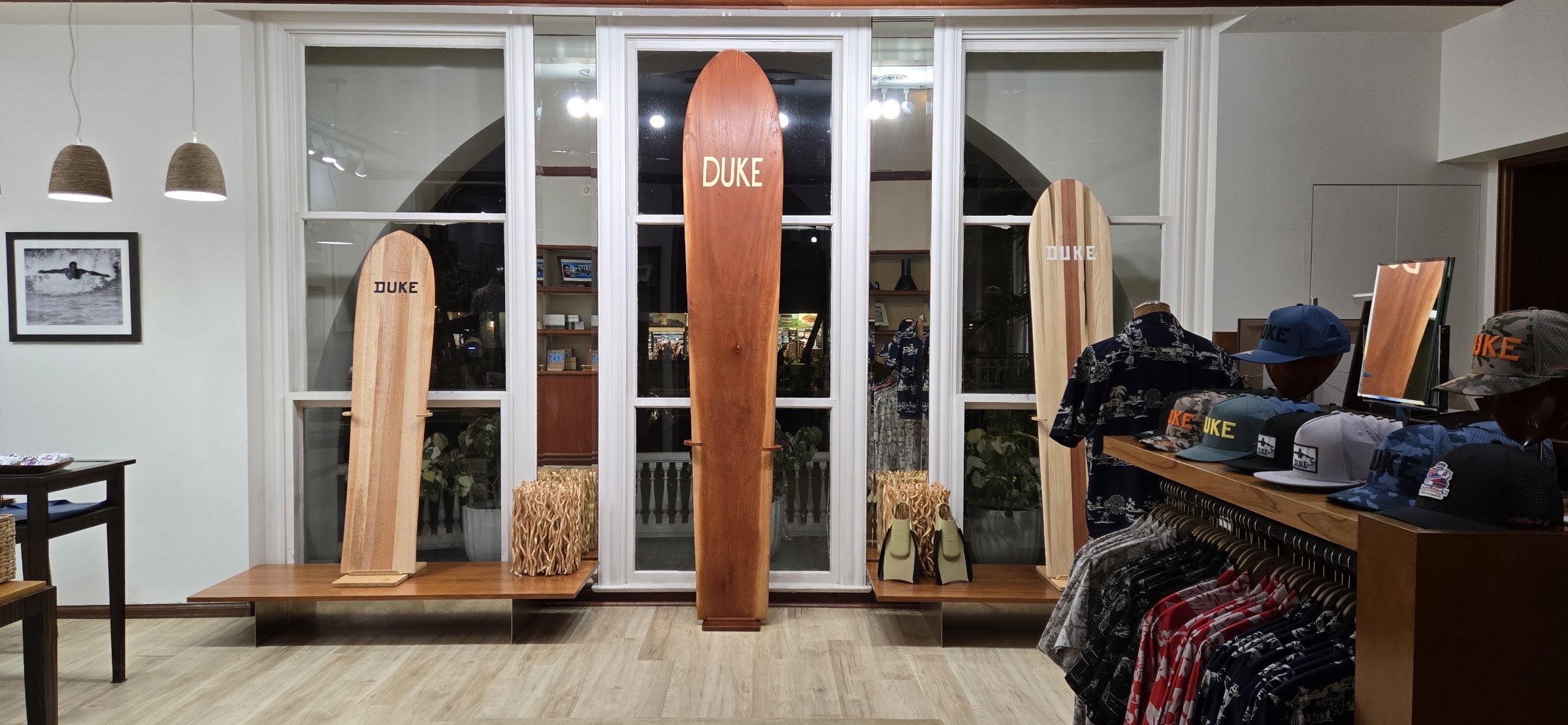
Wooden surfboards standing upright in a bay of tall arched windows with white shutters.
Plate 02Boards standing in the arched window bay. The arches and the shutters are the hotel’s, and they are older than anything else in the room.
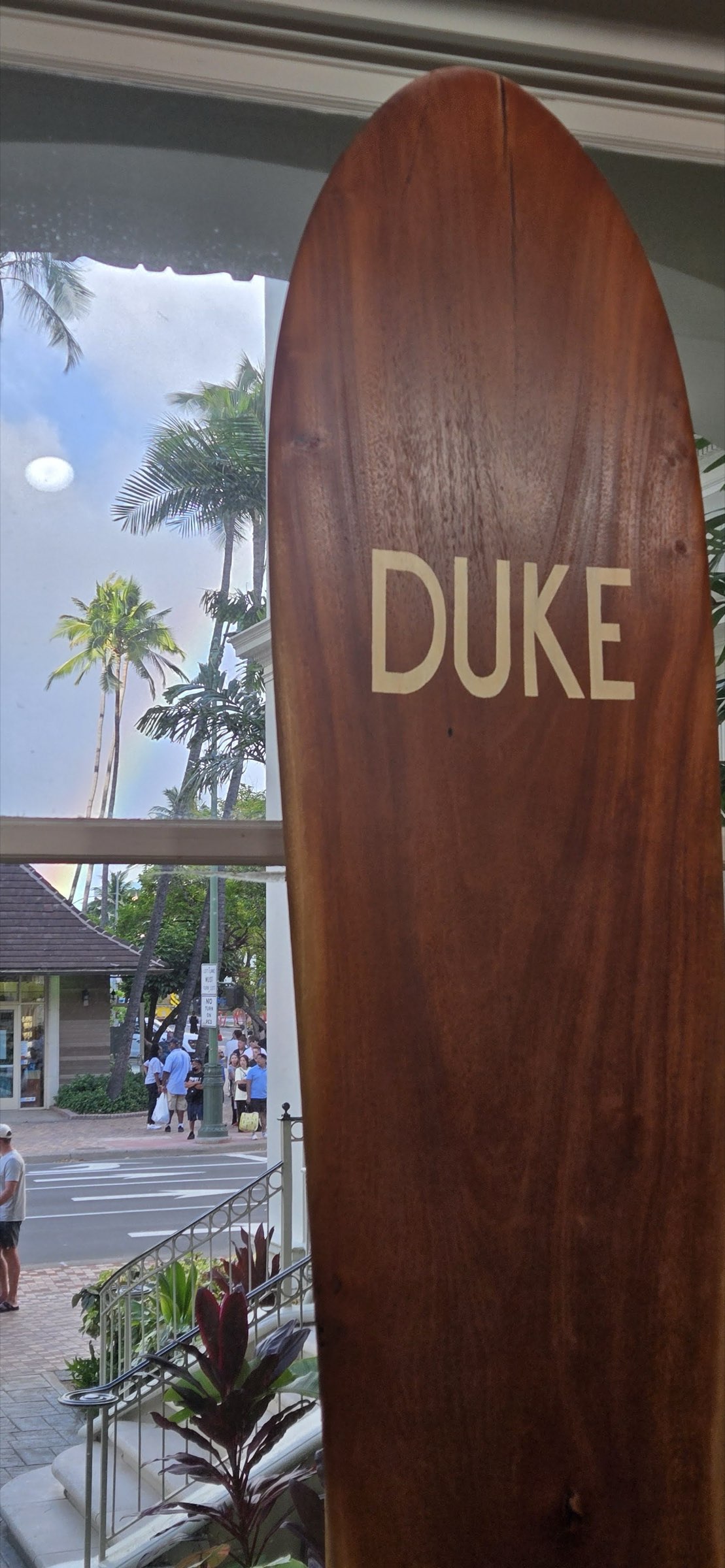
The nose of a dark wooden surfboard against a tall window, with palm trees and the street beyond.
Plate 03A board against the glass, and Kalākaua Avenue on the other side of it.
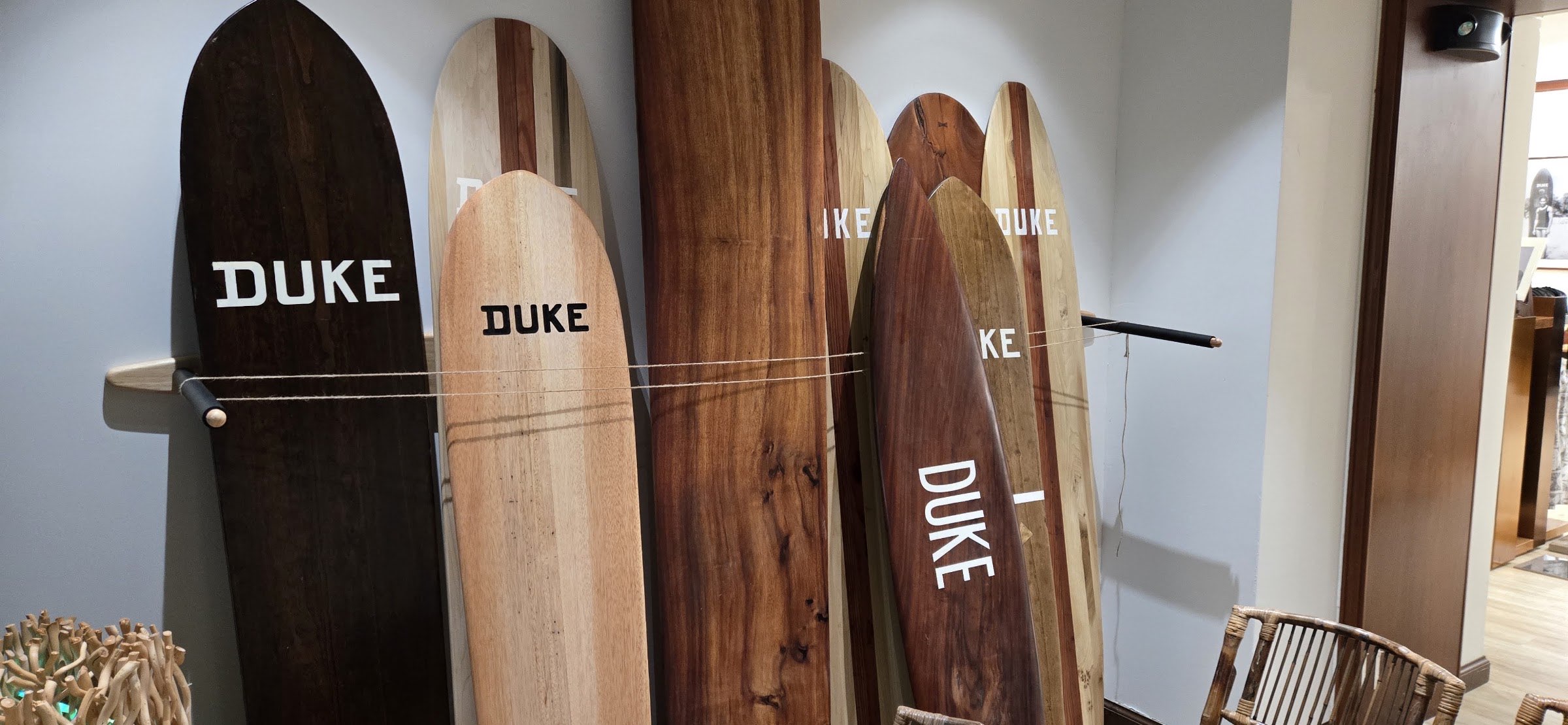
A close view of a row of wooden surfboards leaning side by side, showing the grain of the wood.
Plate 04Koa and walnut, and the grain running the length of each one. They are leaned, not hung, which is how they were kept.
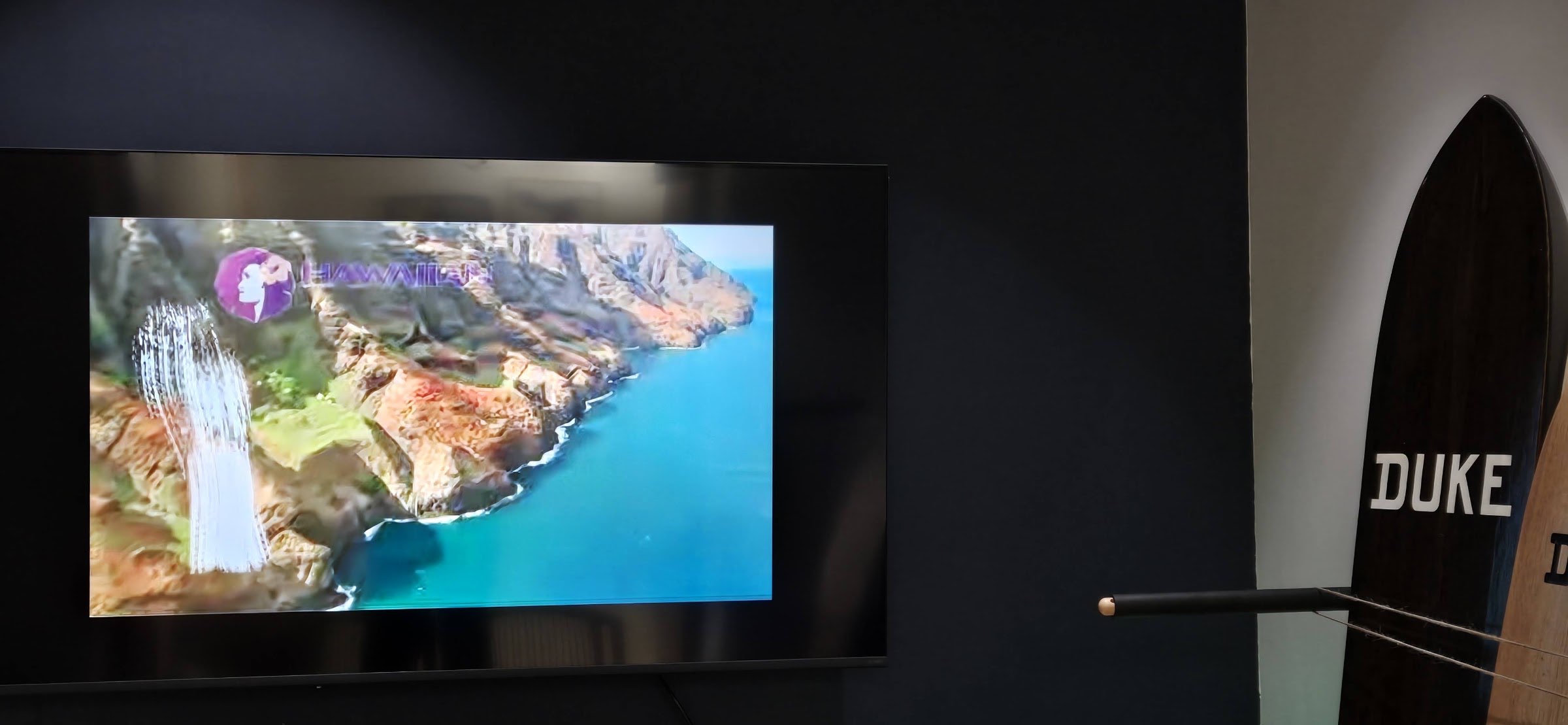
A screen on a dark wall showing an aerial view of a Hawaiian coastline, with the edge of a surfboard at the right.
Plate 05The coast, from the air, on the wall of the alcove.
The window bay seen from inside the gallery, with wooden boards either side of a set of open arched doors.
Plate 06The same bay from the other side, with the doors open onto the courtyard.

The room

One room, on the courtyard side of a building that opened in 1901. The boards stand in the window bays, the film runs in the alcove, and there are chairs.

The wide shape of these photographs is not a crop. They were taken on a phone at its widest setting, which is how you photograph a long narrow room without standing outside it.

Not here yet

The exhibition wall
Seven archival photographs of Duke, framed and lit, down the long wall. There is a good photograph of it and it is not here. Held: our licence covers his name and likeness, not a photographer’s copyright in a particular frame. Every archival image is cleared separately, in writing, and these have not been.
The door, from Kalākaua
What the gallery looks like from the street, which is what you actually need in order to find it. Not photographed yet.

Still to photograph

  • The door from Kalākaua Avenue, and the signage, so a visitor can find the room.
  • The exhibition wall, once the archival prints in it are cleared in writing.
  • A wall label close enough to read all five lines.
  • Natural light, no flash on the work, and the building in frame rather than cropped out.
  • Permission and a name for every person photographed, before the shutter, not after.